What most buyers fail to realize: identical bearing model codes hide night-and-day quality gaps. Cheap bearings pushed by trading companies cut every critical production corner to slash prices, while genuine factory-manufactured premium bearings follow rigid engineering standards that directly protect your profits, brand reputation and long-term supply stability. This complete guide breaks down every core feature that defines reliable, long-life bearings. We also share quick supplier tests to expose middlemen who source mixed low-grade stock from random subcontractors with zero quality oversight.
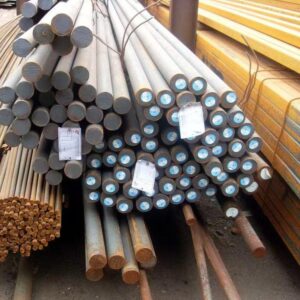
- Pure Vacuum-Degassed GCr15 Bearing Steel (No Recycled Scrap Metal) Raw material is the foundation of bearing service life — this is where 90% of low-cost imports fail catastrophically. Premium factory standard: Certified vacuum-degassed AISI 52100 / GCr15 high-carbon chromium steel complying with ISO 683-17. The vacuum melting process eliminates internal slag, air bubbles and uneven grain structure that cause fatigue cracking. After full heat treatment, stable hardness hits 60–64 HRC across every ring, delivering superior wear, shock and load resistance. Every batch comes with traceable mill test certificates (MTC). Cheap trader bearing shortcut: Mixed recycled scrap steel or low-carbon substitute alloys. Hardness varies wildly within one single bearing ring, with hidden soft spots and porosity. Under continuous running or heavy impact, raceways pit, deform or crack within 3–6 months of operation. Quick supplier test: Request batch steel certification upfront. Trading companies cannot provide consistent, verifiable material paperwork.
- Complete In-House Heat Treatment With Uniform Hardness Control Heat treatment determines dimensional stability and lifespan — a step most resellers outsource to unregulated third-party workshops. Genuine manufacturers run a closed full-cycle process: spheroidizing annealing → controlled quenching → low-temperature tempering. Key quality markers: Consistent metal microstructure, zero surface decarburization, hardness fluctuation limited to ±1 HRC per production lot. No warped rings, quenching stains or brittle edges. Low-grade red flag: Rushed, incomplete heat cycles resulting in uneven hardness. These bearings expand under operating heat, generate extreme vibration and seize mid-run, destroying expensive machinery shafts. Critical dividing line: Only factories owning independent heat treatment lines guarantee repeatable results. Middlemen have zero process control over outsourced heat treatment.
- Superfinished Raceways & Selectable Precision Grades (P0 / P6 / P4) Top-tier bearings offer tiered precision grades matched to different industrial application demands, verified with professional lab measuring equipment. General machinery: Standard P0 / P6 tolerance for light-to-medium load equipment CNC tools, high-speed motors, automotive wheel hubs: Ultra-precise P4 grade with ultra-smooth superfinishing (Ra 0.05–0.1μm) Premium factory advantages: Tight roundness, cylindricity and dimensional tolerances, minimal friction loss, ultra-quiet rotation and extended L10 service life. Trader quality flaw: All bearings lumped as generic “standard grade”, mixing leftover P0 scrap and falsely labeling them P4. They cannot provide original roundness tester, roughness or vibration test logs to back up precision claims.
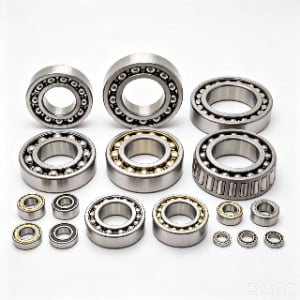
- Optimized Rolling Elements & Balanced Load Distribution Quality bearings use perfectly polished, uniformly sized balls or tapered rollers with engineered crown profiles to spread radial and axial loads evenly across raceway surfaces. Heavy-duty tapered roller bearings for trucks, construction and agricultural machinery: Curved roller crown design eliminates edge pressure marks during sudden impact or overloading. Deep groove ball bearings for motors, household appliances and transmission parts: Smooth deep raceway geometry reduces running noise and doubles usable lifespan compared to cheap alternatives. Junk bearing flaw: Uneven, rough rolling elements with burrs and inconsistent diameters. Minor overload creates permanent indentations, constant humming vibration and accelerated wear.
- Multi-Layer Sealing & Long-Term Anti-Corrosion Coating Sealing systems decide how well bearings survive dusty, muddy, humid or wet working environments during ocean shipping and field operation. Factory premium configurations: Dual contact rubber 2RS seals, metal ZZ shields or hybrid reinforced seals to lock in high-temperature lithium grease and block water, dust, metal shavings and mud ingress. Full phosphating + passivation anti-rust coating on all exposed metal surfaces, stable anti-corrosion protection for long sea transit and tropical storage. Trader cost-cutting trick: Thin single-layer fragile seals that crack easily, weak thin rust coating that oxidizes mid-shipping, and low-grade generic grease that leaks at moderate operating temperatures.
- Full Batch Traceability & Strict Multi-Stage QC Inspection This is the clearest divider between direct manufacturers and middleman traders. Authentic bearing factories implement full statistical process control (SPC) across every production run: Raw steel incoming quality check Post-heat treatment hardness testing Dimensional tolerance & precision measurement Vibration, noise and rotational smoothness testing Final visual screening for surface defects Every export shipment includes a complete set of factory inspection reports with unique batch serial numbers for full traceability. Automotive-grade production lines hold IATF 16949 certification; general industrial lines maintain ISO 9001 quality management systems. Trading companies cannot guarantee batch consistency: They source inventory from 5+ random small workshops to fill orders. Hardness, dimension and noise performance swing drastically between containers, with no unified QC standard or traceable test documentation.
- Stable Cage Structure & Low-Friction Assembly High-quality bearings adopt reinforced brass, nylon or stamped steel cages precision-stamped to hold rolling elements evenly without friction or deformation during high-speed rotation. Cheap bearings often use thin, brittle recycled steel cages that bend or crack under sustained high RPM, leading to rolling element jamming and total bearing failure.
- Professional OEM & Customization Engineering Support Real manufacturers operate internal mold workshops and full mechanical engineering teams to tailor bearings to your unique equipment specs: Custom internal clearance adjustments for high-speed, high-temperature or low-noise operating conditions Custom laser logo marking, non-standard bore/outer diameters and modified width Specialized sealing, high-temperature grease and surface coatings for extreme working environments Middleman limitation: Zero in-house engineering capacity. Every customization request forces them to “consult external factories”, with no guarantee modified bearings match your technical requirements. Hidden Long-Term Costs of Low-Quality Bearings Sourced From Traders Many buyers fixate solely on unit price and overlook far larger total ownership losses: Short service life creates constant replacement costs, labor downtime and halted production Excessive vibration damages expensive host machinery, triggering costly equipment repairs Mass defective batches lead to customer refunds, chargebacks and permanent lost distribution contracts Resellers shift all liability to unknown subcontractors, offering zero reliable after-sales compensation for failures Unstable batch quality blocks long-term OEM and private-label scaling opportunities Quick Supplier Audit Checklist to Filter Fake Factory Traders Demand unannounced random live video tours of heat treatment lines, grinding equipment and QC testing labs Request steel mill certificates, hardness logs and vibration test reports per order batch Verify business license confirms “bearing manufacturing” scope (only “sales & trading” = pure middleman) Test technical expertise by asking about precision grades, clearance tuning and heat treatment parameters Cross-check certification addresses match industrial park factory locations (downtown office addresses almost always mean traders)