Who Are the Most Trusted Bearing Manufacturers?
Finding a bearing supplier is easy. Finding a manufacturer you can trust with your business for years is much harder.
Imagine purchasing 10,000 bearings for your distribution company. The first shipment performs well, but the second develops abnormal noise and premature failures. Your customers complain, replacement costs increase, and your supplier cannot explain what went wrong.
How can you avoid choosing the wrong manufacturer?
The most trusted bearing manufacturers include SKF, Schaeffler, NSK, NTN, and Timken. These internationally established companies have extensive experience in bearing engineering and manufacturing. However, no single manufacturer is best for every application. For industrial buyers, a trustworthy manufacturer must demonstrate consistent product quality, controlled manufacturing processes, reliable inspection records, technical expertise, and dependable delivery. The right supplier is one whose capabilities can be verified and whose products consistently meet your requirements.
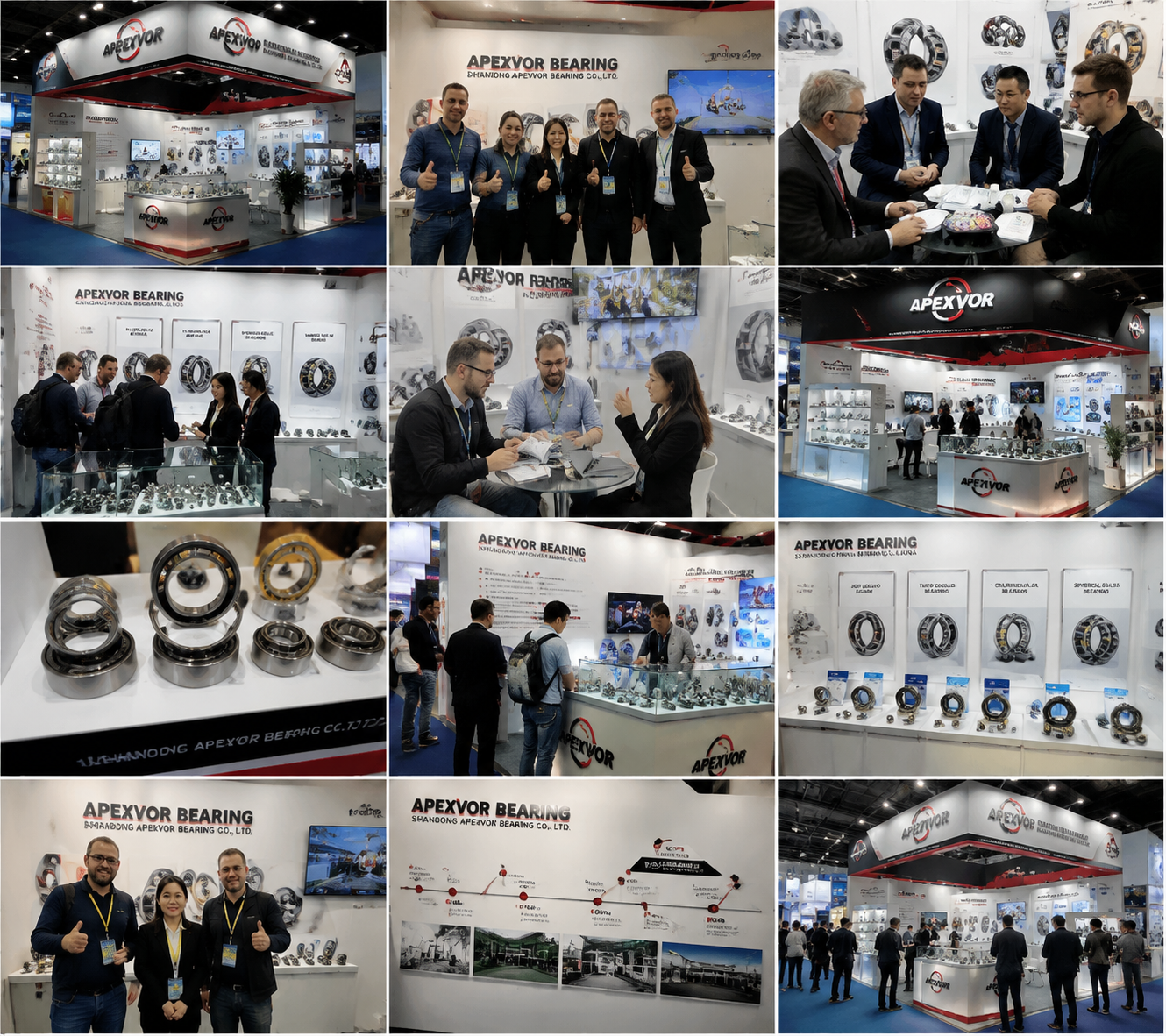
I'm Yuri, owner and senior engineer at APEXVOR Bearing. Our family has manufactured bearings since the 1970s, spanning four generations.
Over the years, I've learned that the difference between a reliable bearing and a disappointing one often begins long before final inspection.
In this guide, I'll explain which manufacturers deserve consideration, what makes a factory trustworthy, and how professional buyers can evaluate suppliers before placing bulk orders.
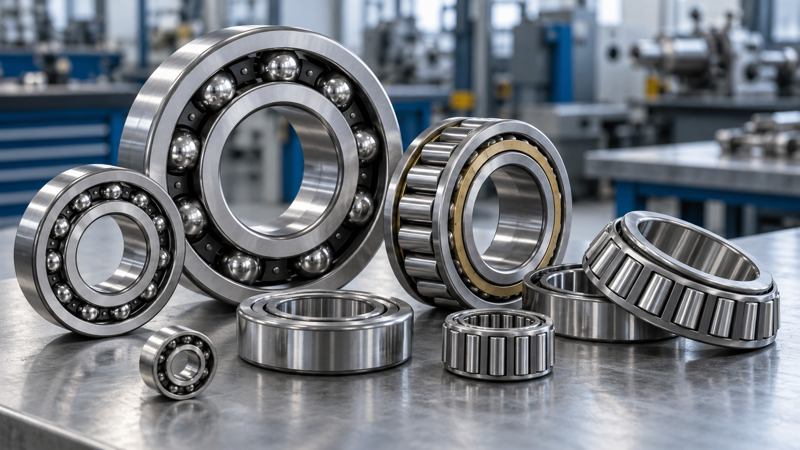
1. Who Are the World's Most Trusted Bearing Manufacturers?
Several international bearing manufacturers have established reputations through engineering development, manufacturing experience, and extensive industrial operations.
SKF — Sweden
SKF manufactures rolling bearings, bearing units, lubrication systems, and condition-monitoring solutions.
Its products serve industrial machinery, transportation, energy, and other demanding applications.
Schaeffler — Germany
Schaeffler manufactures precision bearings and motion technology products under established brands including FAG and INA.
Its products are widely used in automotive systems, industrial machinery, and precision engineering applications.
NSK — Japan
NSK manufactures ball bearings, roller bearings, and precision motion products.
Its engineering experience makes it an established supplier for machine tools, automotive systems, and industrial equipment.
NTN — Japan
NTN manufactures bearings for automotive and industrial applications.
Its product portfolio includes ball bearings, roller bearings, and specialized bearing products.
Timken — United States
Timken manufactures engineered bearings and industrial motion products.
The company has extensive experience in tapered roller bearings and demanding industrial applications.
These companies are established industry participants, not a verified ranking of customer satisfaction or product reliability.
Does a Famous Brand Guarantee the Best Choice?
Not necessarily.
A machinery manufacturer developing specialized equipment may require extensive engineering support.
A distributor purchasing standard bearings in large quantities may prioritize competitive pricing, consistent quality, flexible packaging, and dependable delivery.
My insight: The most trustworthy manufacturer is not always the largest. It is the manufacturer whose capabilities match your actual application and purchasing requirements.
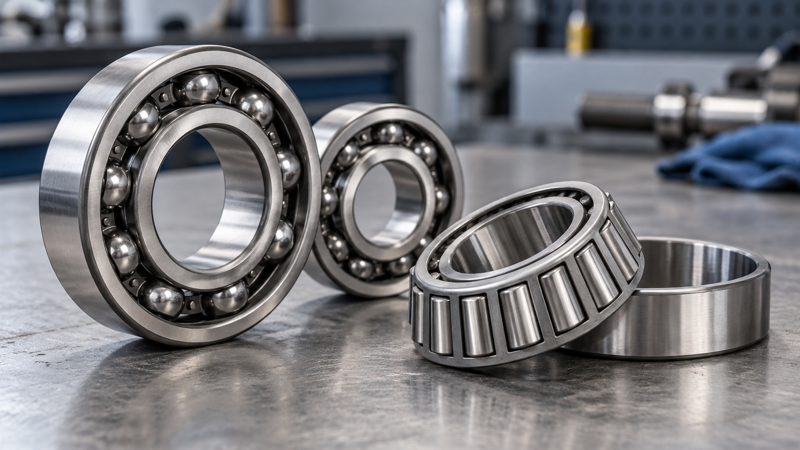
2. What Makes a Bearing Manufacturer Truly Trustworthy?
In my experience, bearing quality cannot be judged by appearance alone.
Two manufacturers may use the same steel grade and produce bearings with identical dimensions, yet their products may perform differently.
The difference often lies in manufacturing control.
Material Quality and Heat Treatment
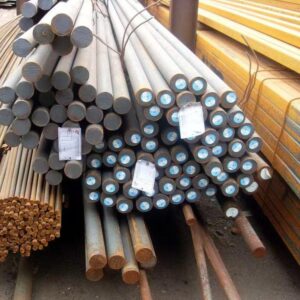
GCr15 is a commonly used bearing steel, but material selection is only the beginning.
Forging and spheroidizing annealing influence the material's structure and subsequent processing.
Heat treatment affects hardness, toughness, dimensional stability, and fatigue performance.
Poor process control may contribute to distortion, unsuitable microstructures, and inconsistent mechanical properties.
At APEXVOR, we use bearing steels such as GCr15 and GCr15SiMn according to product requirements.
Our factory controls critical manufacturing processes, including heat treatment, within our own facilities.
My advice: Don't simply ask which steel a manufacturer uses. Ask how the factory controls that steel throughout production.
Precision Grinding and Assembly
A bearing may satisfy basic dimensional requirements and still generate abnormal vibration or noise.
Raceway waviness, surface defects, unsuitable internal clearance, and contamination can affect operating performance.
Precision grinding and superfinishing help control raceway geometry and surface condition.
Clean assembly and appropriate component matching are equally important.
The ISO 15243 standard[^1] classifies rolling bearing damage and failure modes, describing their characteristics and possible causes.
This provides engineers with a technical basis for investigating premature bearing damage rather than relying on assumptions.
My insight: Final inspection can identify defects, but it cannot compensate for poor manufacturing. Reliable quality must be built into every production stage.
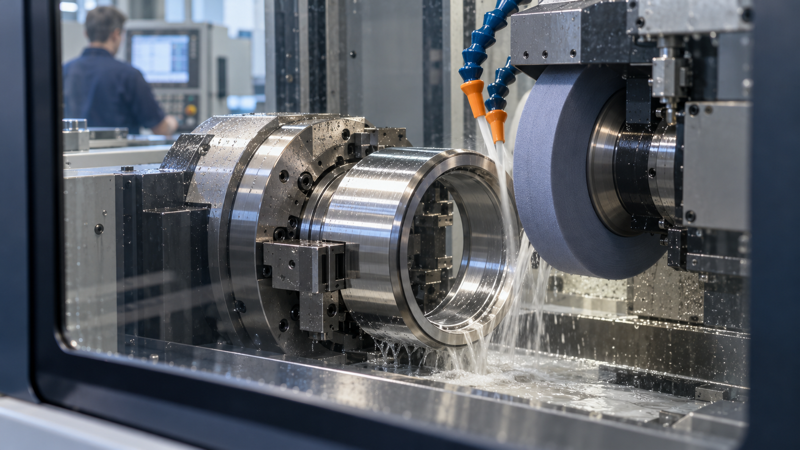
3. How Can Buyers Verify a Reliable Bearing Manufacturer?
A professional buyer should never rely exclusively on factory photographs, attractive quotations, or promotional claims.
Trust requires evidence.
Verify Genuine Manufacturing Capabilities
First, determine whether your supplier actually manufactures bearings.
Trading companies can provide useful sourcing services, but buyers should understand who controls production and takes responsibility for quality.
At APEXVOR, our fourth-generation family factory is located in Linqing, Shandong Province, China.
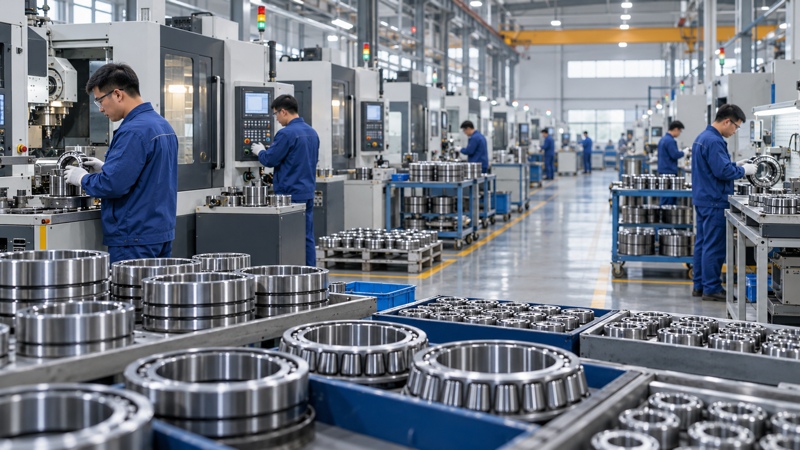
We operate eight in-house production lines.
Our manufacturing system covers eight essential processes:
- Raw material cutting
- Forging
- Spheroidizing annealing
- Precision turning
- Heat treatment and quenching
- Precision grinding and superfinishing
- Cleaning and assembly
- Final inspection and testing
These are eight manufacturing processes, not eight separate production lines assigned to individual operations.
We control critical manufacturing operations within our own factory rather than outsourcing them to small subcontracting workshops.
Request Quality Documentation
Before placing a substantial wholesale order, request:
- Material specifications and traceability records.
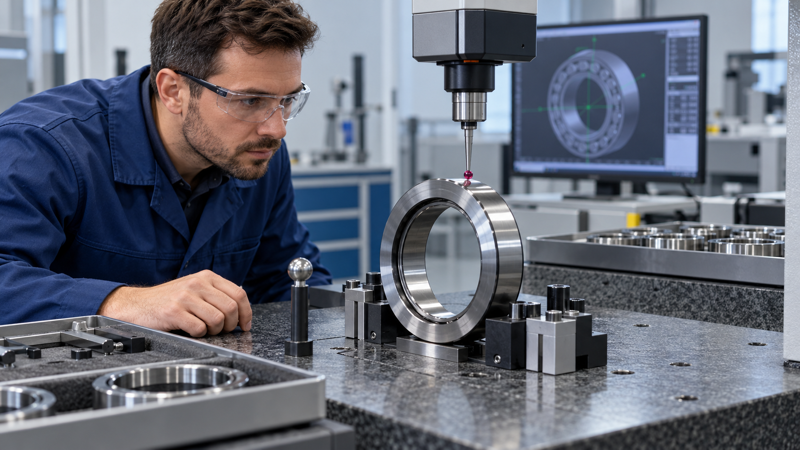
- Dimensional inspection reports.
- Heat treatment and hardness documentation.
- Relevant product testing results.
- Samples evaluated against agreed specifications.
- Realistic production and delivery schedules.
A manufacturer should be able to explain its inspection methods and acceptance criteria.
Verify Quality Management Certifications
ISO 9001 is a widely recognized quality management standard.
However, certification alone does not guarantee that every bearing meets its technical specifications.
Buyers can use IAF CertSearch[^2] to search for and verify available accredited management-system certification information.
This helps buyers investigate whether a supplier's certification claims are supported by accredited certification records.
My insight: A reliable manufacturer should welcome technical questions. If a supplier cannot explain its production and inspection methods, buyers should investigate further before committing to large orders.
4. Are Chinese Bearing Manufacturers as Trustworthy as Global Brands?
Yes. Qualified Chinese manufacturers can produce reliable bearings for international industrial applications.
However, manufacturing capabilities and quality consistency vary between factories.
The country of origin alone does not determine bearing quality.
Why Do Some Low-Cost Bearings Fail Prematurely?
Some low-cost bearings may suffer from inadequate heat treatment, inaccurate grinding, contamination, or inconsistent assembly.
However, premature bearing failure does not always indicate a manufacturing defect.
Incorrect installation, excessive loads, unsuitable lubrication, and contamination during operation can also shorten bearing life.
The ISO 281 standard[^3] specifies methods for calculating rolling bearing rating life. Its modified rating-life calculations consider factors including lubrication conditions, contaminated lubricant, and reliability.
This explains why bearing life cannot be evaluated solely by looking at the manufacturer's name or the initial purchase price.
What Advantages Can Qualified Chinese Factories Offer?
China has established bearing manufacturing regions with specialized suppliers, production equipment, and experienced technical personnel.
Qualified manufacturers can offer competitive production costs, OEM customization, flexible packaging, and direct engineering communication.
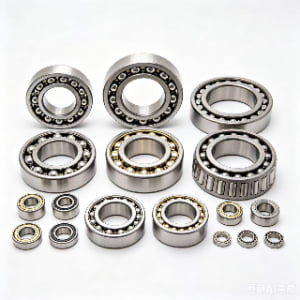
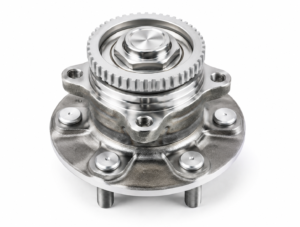
At APEXVOR, we manufacture deep groove ball bearings, tapered roller bearings, wheel hub bearings, cylindrical roller bearings, and other industrial bearing products.
We also support non-standard customization and private-label manufacturing.
Our minimum order quantity starts from 500 sets for eligible products.
My insight: Buyers should evaluate factories individually. A manufacturer's actual processes, inspection records, and product consistency matter more than its nationality.
5. How Should You Choose a Manufacturer for Long-Term Cooperation?
Imagine receiving quotations from three bearing suppliers.
The first offers the lowest price.
The second represents a famous international brand.
The third provides competitive pricing, clear technical specifications, inspection records, and realistic delivery commitments.
Which supplier should you choose?
I would begin by comparing their ability to deliver equivalent products consistently.
Compare Total Purchasing Costs
The lowest unit price does not necessarily mean the lowest total purchasing cost.
Premature bearing failures can create warranty claims, replacement shipments, equipment downtime, and customer complaints.
For distributors, inconsistent product quality can also damage long-term customer relationships.
Therefore, purchasing decisions should consider technical quality, consistency, and commercial risk alongside price.
Evaluate Communication and Delivery
A trustworthy manufacturer should communicate clearly about product specifications, production schedules, potential delays, and quality concerns.
At APEXVOR, standard product lead times are typically 15–25 days, while customized products generally require 25–40 days, depending on specifications and production conditions.
We also provide direct technical communication for OEM and non-standard bearing projects.
Establish Long-Term Accountability
Before confirming an order, agree on:
- Bearing model and technical specifications.
- Inspection methods and acceptance criteria.
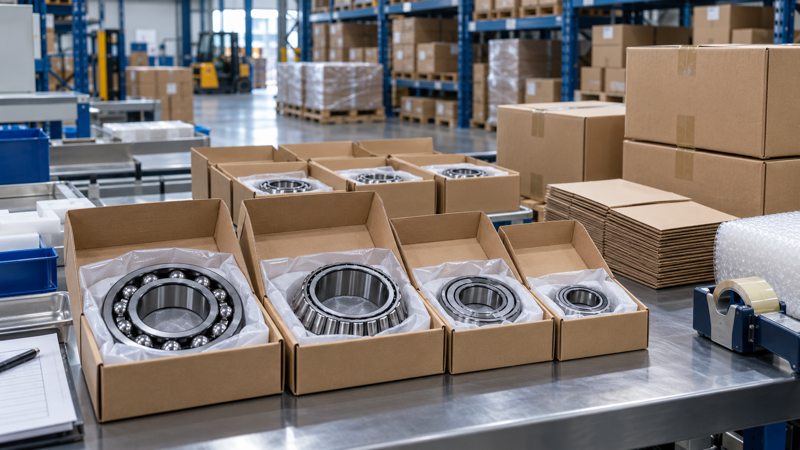
- Packaging and labeling requirements.
- Delivery terms and production schedules.
- Procedures for resolving quality complaints.
A successful first shipment is encouraging.
But consistent performance across repeated orders is what creates genuine trust.
My final advice: Never choose a manufacturer solely because it promises quality. Choose one that can demonstrate quality repeatedly.
Conclusion
The most trusted bearing manufacturers earn confidence through engineering expertise, controlled manufacturing processes, transparent quality inspection, and dependable delivery.
SKF, Schaeffler, NSK, NTN, and Timken are established international manufacturers worth considering.
However, qualified independent factories can also provide reliable products and valuable long-term partnerships.
After years of involvement in bearing manufacturing, my belief is simple:
Trust is not created by a famous logo, an attractive quotation, or a certificate alone. It is earned through consistent manufacturing performance and accountability.
Choose a manufacturer whose processes you can verify, whose quality you can measure, and whose commitments you can depend on.
People Also Ask
Which Bearing Manufacturer Is the Best in the World?
There is no single best manufacturer for every application. SKF, Schaeffler, NSK, NTN, and Timken are established global manufacturers. The best choice depends on technical specifications, operating conditions, engineering support, and purchasing requirements.
Are Chinese Bearings Reliable?
Yes. Qualified Chinese manufacturers can produce reliable bearings. Buyers should verify material quality, manufacturing processes, inspection records, and product samples before placing bulk orders.
How Can I Identify a Genuine Bearing Factory?
Request factory information, manufacturing documentation, production records, and inspection reports. When appropriate, arrange an on-site or independent factory inspection.
What Certifications Should a Bearing Manufacturer Have?
ISO 9001 is a widely used quality management certification. Additional certifications or compliance requirements depend on the intended application, industry, and destination market.
Is Buying Bearings Directly From a Manufacturer Better?
Factory-direct purchasing can improve technical communication, customization, pricing transparency, and accountability. However, distributors may offer advantages in local inventory, logistics, and regional support.
References
[^1]: Rolling Bearing Damage and Failure Analysis. ISO 15243:2017 classifies different failure modes occurring in rolling bearings during service. It describes their visible characteristics, appearances, and possible root causes. This supports the article's explanation that bearing damage should be investigated through recognized failure characteristics rather than assumptions. Source: ISO 15243:2017 — Rolling Bearings, Damage and Failures
[^2]: Verification of Manufacturer Certifications. IAF CertSearch provides a system for searching and verifying accredited management-system certifications. Its verification guidance explains how buyers can examine certification information and check whether a company's certification claims are supported by available records. This supports the recommendation to verify supplier certificates instead of relying only on copies supplied by the manufacturer. Source: IAF CertSearch — Certificate Verification Guide
[^3]: Bearing Rating Life and Operating Conditions. ISO 281:2007 specifies methods for calculating rolling bearing dynamic load ratings and rating life. Its modified rating-life calculations take into account reliability, lubrication conditions, contaminated lubricant, and fatigue load. This supports the article's explanation that operating conditions influence bearing life calculations and that premature failure should not automatically be attributed to manufacturing quality. Source: ISO 281:2007 — Rolling Bearings, Dynamic Load Ratings and Rating Life