How to Tell a Trading Company from a Real Bearing Manufacturer
You find two bearing suppliers on Google or Alibaba.
Both claim to be factories. Both display production equipment, ISO certificates, and professional-looking product photographs.
One offers a surprisingly low price. The other promises better quality and faster delivery.
But here is the question most buyers forget to ask:
Who actually manufactures your bearings—and who takes responsibility when something goes wrong?
The most reliable way to distinguish a bearing manufacturer from a trading company is to verify who owns and controls the production processes, especially heat treatment, precision grinding, assembly, and quality inspection. A genuine manufacturer should be able to demonstrate its equipment, explain its manufacturing methods, provide traceable inspection records, and communicate directly about technical problems. A trading company may source bearings from multiple factories without controlling these operations itself. However, being a manufacturer does not automatically guarantee better quality, and being a trading company does not automatically mean a supplier is unreliable.
I'm Yuri, the owner and senior engineer of APEXVOR Bearing.
Our family has been manufacturing bearings since the 1970s. Today, we are a fourth-generation bearing manufacturer based in Linqing, Shandong Province, China.
My work involves forging, turning, heat treatment, grinding, assembly, inspection, and the relationship between manufacturing processes and bearing performance.
I also understand the commercial side of manufacturing: production costs, delivery schedules, OEM customization, and the challenges faced by international buyers.
I want to share something that many sourcing guides overlook.
The real difference between a factory and a trading company is not simply who sells the product. It is who controls the decisions that determine its quality.
1. What Is the Difference Between a Bearing Manufacturer and a Trading Company?
At first glance, both businesses may appear identical.
They may sell the same bearing models, offer similar packaging, and even provide quotations using the same technical specifications.
But their roles in the supply chain are different.
What Does a Bearing Manufacturer Actually Do?
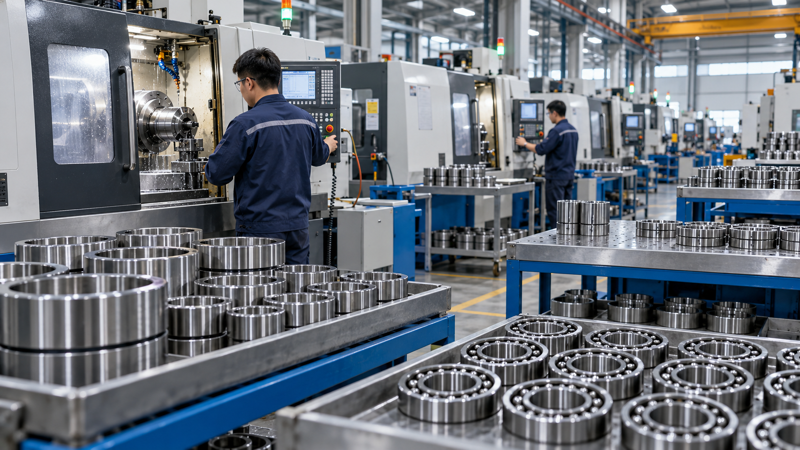
A genuine bearing manufacturer directly operates manufacturing equipment and controls at least the production processes it claims to perform.
Depending on its capabilities, those operations may include:
- Material preparation and forging
- Turning and machining
- Heat treatment
- Precision grinding and superfinishing
- Cleaning and assembly
- Quality inspection and testing
Not every genuine manufacturer performs every process in-house. Some specialize in selected manufacturing stages or use qualified subcontractors.
The important question is whether the supplier accurately discloses its capabilities and takes responsibility for manufacturing quality.
What Does a Bearing Trading Company Do?
A trading company typically purchases bearings from one or more manufacturers and resells them to customers.
Its responsibilities may include supplier selection, product sourcing, packaging, export documentation, logistics, and customer communication.
Some trading companies also provide valuable technical support and supplier quality management.
A well-managed trading company can be a suitable partner, particularly when buyers need many different product categories from multiple factories.
The Difference That Really Matters
| Factor | Bearing Manufacturer | Trading Company |
|---|---|---|
| Production equipment | Operates its own manufacturing equipment | Generally relies on supplier factories |
| Manufacturing decisions | Direct control over processes it performs | Influences production through supplier agreements |
| Technical communication | Potentially direct access to production engineers | May communicate through factory partners |
| Quality control | Can inspect and control its own production | May inspect or arrange third-party inspections |
| Product range | Often concentrated on its manufacturing capabilities | May offer products from multiple factories |
| Customization | Can assess manufacturing feasibility directly | Usually coordinates customization with factories |
| Accountability | Responsible for its own manufacturing operations | Responsible under its supplier and customer agreements |
My insight: A trading company can be professionally managed, and a factory can be poorly managed. Therefore, business identity should be the beginning of your investigation—not the end.
2. Why Do Some Suppliers Claim to Be Factories When They Are Not?
Imagine searching for a tapered roller bearing manufacturer.
You find a supplier displaying hundreds of bearing models, dozens of product categories, and photographs of several different production workshops.
The supplier claims everything is manufactured in-house.
Is that possible?
Sometimes. Large manufacturing groups can operate extensive production facilities.
But for a smaller supplier, such a broad product range deserves closer examination.
Product Catalogs Do Not Prove Manufacturing Capability
A supplier can display thousands of bearing models without producing them.
Product photographs, catalogs, and technical drawings can be obtained from manufacturers or other commercial sources.
Even a factory visit may not reveal the complete picture if the supplier only shows a warehouse or assembly workshop.
A factory is defined by what it actually manufactures—not by the number of products on its website.
Ask Where Critical Processes Take Place
Suppose a supplier claims to manufacture deep groove ball bearings.
Ask:
"Where are the bearing rings heat-treated?"
"Who performs the raceway grinding?"
"Can your engineer explain how you control bearing internal clearance?"
A manufacturer should be able to explain the processes it performs and identify which operations, if any, are subcontracted.
A trading company may need to consult its manufacturing partner.
That is not automatically a problem.
The problem begins when a supplier conceals its actual role.
Why This Matters to International Buyers
Imagine receiving bearings with excessive vibration.
If your supplier controls the grinding and assembly operations, its engineers may be able to investigate the production records directly.
If your supplier purchases finished bearings from several unrelated factories, identifying the responsible production batch may require additional coordination.
This can affect investigation time, corrective actions, and accountability.
My insight: The greatest sourcing risk is not necessarily an intermediary. It is an intermediary who cannot tell you exactly where your product came from.
3. How Can You Verify Whether a Bearing Supplier Is a Real Manufacturer?
I recommend verifying suppliers in three stages.
First: Verify the Factory's Physical Capabilities
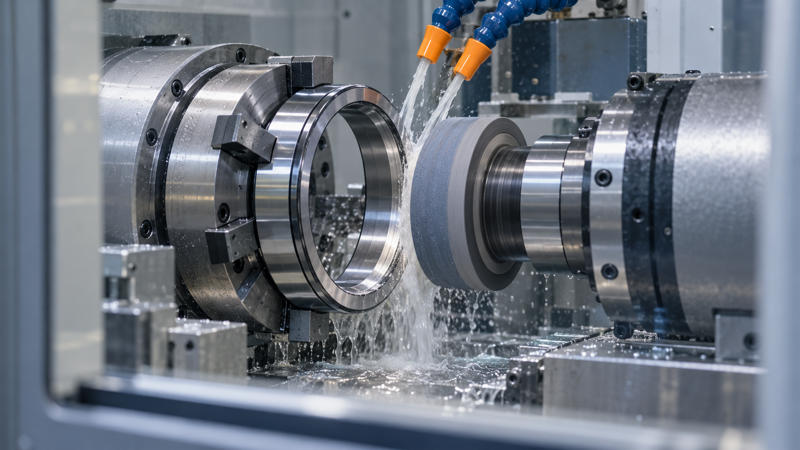
Request photographs or videos of specific equipment rather than general workshop images.
For example:
- Forging equipment
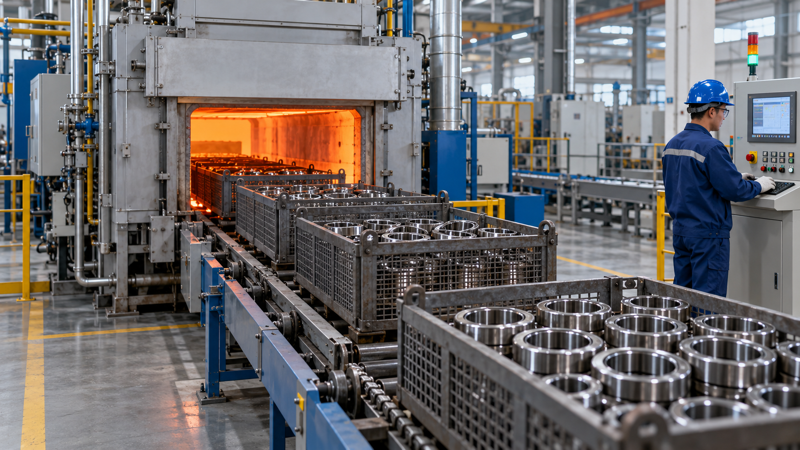
- Heat treatment facilities
- CNC turning machines
- Raceway grinding machines
- Assembly equipment
- Inspection instruments
Ask for a live video walkthrough when possible.
During the walkthrough, request that the supplier explain the production flow of one specific bearing model.
A genuine factory should be able to demonstrate its actual operations.
However, remember that photographs and videos alone are not conclusive proof of ownership or manufacturing capability.
Second: Verify Technical Knowledge
Here is a question I would ask a potential supplier:
"Why can two bearings made from GCr15 steel have different operating performance?"
A superficial answer might be:
"One uses better steel."
But the real explanation is more complex.
Even when two manufacturers use the same nominal steel grade, their products may differ because of material cleanliness, heat treatment, raceway geometry, surface finish, component matching, and assembly conditions.
The ISO 15243 standard[^1] classifies rolling bearing damage and failure modes and describes their characteristics and possible causes.
It helps engineers investigate bearing damage systematically rather than assuming every failure results from poor steel.
This is why I believe a manufacturer's technical understanding matters.
Third: Verify Inspection Records and Traceability
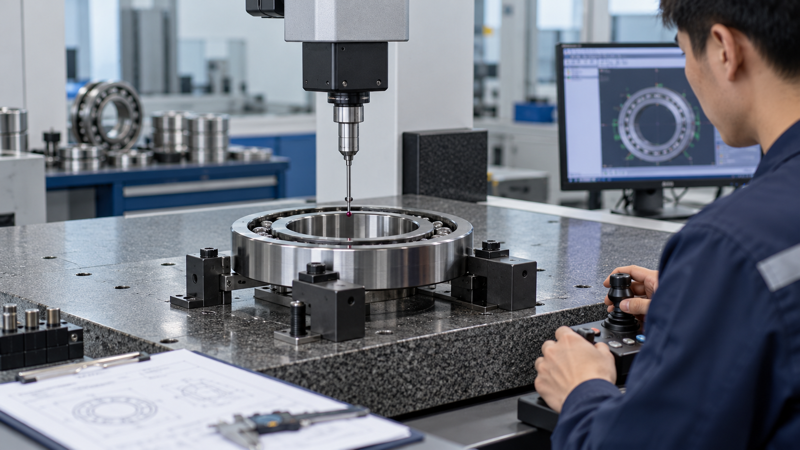
Ask for actual inspection reports related to the products you intend to purchase.
Depending on the bearing type and application, relevant information may include:
- Bore and outside diameter measurements
- Width and geometric tolerances
- Hardness results
- Internal clearance measurements
- Vibration or noise test results
- Material batch identification
- Production batch information
A manufacturer should be able to explain how the results relate to your agreed specifications.
The ISO 9001 quality management standard[^2] establishes requirements for a quality management system, including the control of processes and the consistent provision of products meeting applicable requirements.
But an ISO 9001 certificate does not replace product inspection.
Buyers should also verify certification claims using appropriate certification records, such as those available through IAF CertSearch[^3].
My insight: A certificate tells you something about a management system. A relevant inspection record tells you something about a particular product. You need both kinds of evidence.
4. Why Does Manufacturing Control Matter More Than Factory Size?
This is where I want to share a perspective based on our family's manufacturing experience.
Many buyers compare factories by their buildings, employee numbers, and production capacity.
These factors matter commercially.
But they do not tell the whole story about bearing performance.
Heat Treatment Is More Than Achieving the Correct Hardness
Consider two bearing rings made from the same steel grade.
Both may pass a basic hardness test.
Does that mean they will have identical fatigue performance?
No.
Hardness is only one indicator.
Heat treatment also influences microstructure, residual stresses, dimensional stability, and mechanical properties.
A manufacturer must select and control the appropriate process for the intended bearing application.
At APEXVOR, heat treatment is performed within our own manufacturing facilities.
This gives our production team direct control over critical process decisions.
Precision Grinding Is More Than Meeting the Drawing
Now imagine two bearings with bore diameters that both meet the customer's dimensional tolerance.
One runs smoothly.
The other generates noticeable vibration.
Why?
Because dimensional conformity alone does not fully describe raceway geometry, waviness, surface condition, component matching, or assembly quality.
The bearing may meet one measurement requirement while still exhibiting performance differences caused by other characteristics.
This is why I never judge bearing quality using only a dimensional inspection report.
Assembly Can Change the Final Result
Even accurately manufactured components can perform poorly if assembly conditions are unsuitable.
Contamination, incorrect component matching, or inappropriate internal clearance may affect bearing operation.
The ISO 281 standard[^4] provides methods for calculating rolling bearing rating life and modified rating life, taking account of factors including lubrication and contamination.
This supports a broader engineering principle: bearing performance depends on both the manufactured product and its operating conditions.
What This Means for Buyers
When evaluating a factory, ask who controls the critical manufacturing decisions.
A large workshop is not enough.
A low quotation is not enough.
A polished product catalog is not enough.
My insight: Manufacturing capability is the ability to produce a bearing. Manufacturing control is the ability to reproduce the required quality consistently.
That distinction matters much more than factory size alone.
5. Is Buying Directly from a Bearing Factory Always Better?
No.
This may sound surprising coming from a factory owner.
But I believe buyers deserve a balanced answer.
When a Trading Company May Be the Better Choice
Suppose you operate an industrial parts distribution business.
You need bearings, seals, belts, fasteners, and several other product categories in relatively small quantities.
Working with separate manufacturers for every product may increase communication and logistics costs.
A capable trading company can consolidate orders and coordinate multiple suppliers.
For some buyers, this is genuinely valuable.
When Factory-Direct Purchasing Makes More Sense
Now consider a different situation.
You purchase thousands of tapered roller bearings every month.
Your customers require stable quality, specific packaging, reliable lead times, and consistent technical specifications.
In this situation, direct access to manufacturing operations can offer important advantages.
You may communicate with engineers without unnecessary intermediaries.
You may discuss manufacturing feasibility before confirming customized orders.
You may also obtain production and inspection information directly from the responsible factory.
The Hidden Cost of Poor Communication
Consider a customer who reports abnormal bearing noise.
The customer contacts the supplier.
The supplier contacts another company.
That company contacts the actual manufacturer.
Several days may pass before the production team receives the technical details.
Not every trading company operates this way. Strong trading companies can manage technical communication efficiently.
But each additional communication step creates another opportunity for delay or misunderstanding.
My insight: The real cost of an intermediary is not simply its profit margin. It is the cost of any delay, information loss, or unclear responsibility introduced into the supply chain.
6. What Should You Ask Before Placing a Bulk Bearing Order?
If I were purchasing bearings from an unfamiliar supplier, I would not begin by asking for the lowest price.
I would begin with the following questions.
Seven Questions Every Bearing Buyer Should Ask
- Which bearing models do you manufacture in your own factory?
- Which production processes are completed in-house, and which are outsourced?
- Can I inspect your heat treatment, grinding, and assembly operations?
- Can you provide inspection records for the specific bearings I intend to purchase?
- How do you trace raw materials and production batches?
- Who investigates technical complaints and implements corrective actions?
- Can you consistently meet my specifications, quantity, and delivery schedule?
These questions are more useful than simply asking:
"Are you a factory?"
Any supplier can answer yes.
Not every supplier can demonstrate its claims.
How We Approach These Questions at APEXVOR
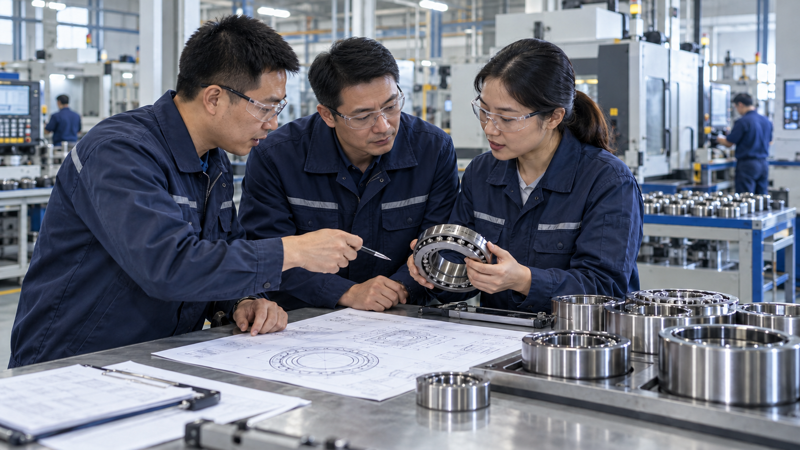
Our factory operates eight in-house production lines and maintains a manufacturing system covering eight core processes:
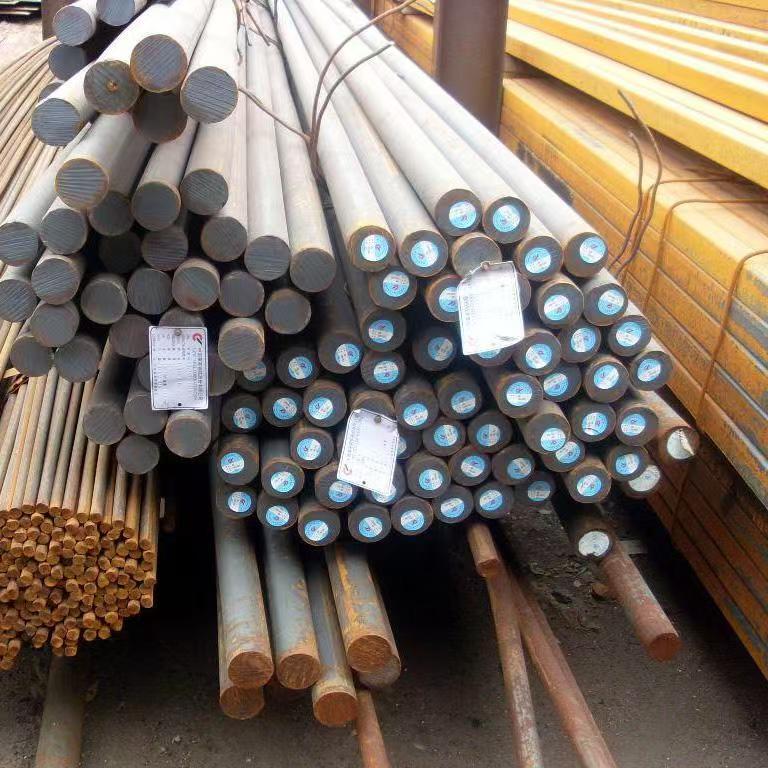
- Raw material cutting
- Forging
- Spheroidizing annealing
- Precision turning
- Heat treatment and quenching
- Precision grinding and superfinishing
- Cleaning and assembly
- Final inspection and testing
Our critical manufacturing processes are controlled within our own facilities.
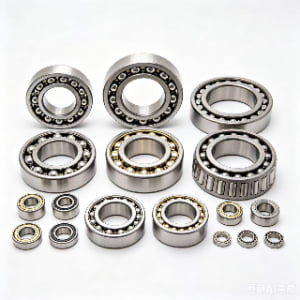
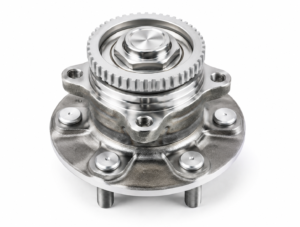
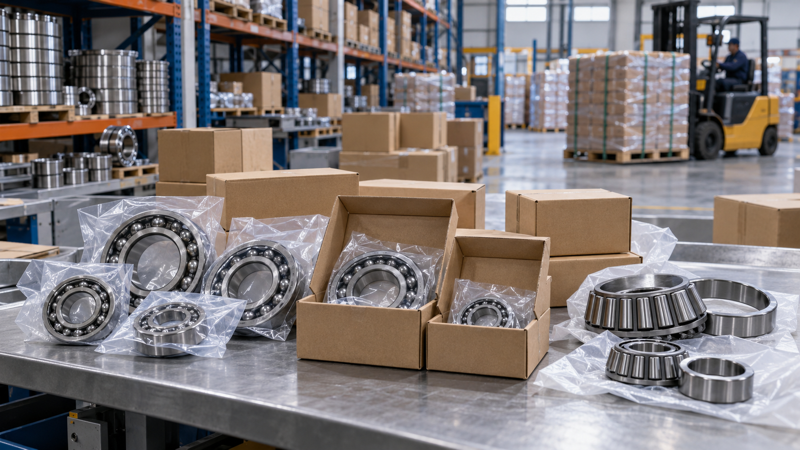
We manufacture deep groove ball bearings, tapered roller bearings, wheel hub bearings, double-row cylindrical roller bearings, and customized industrial bearings.
We also support OEM/ODM manufacturing, CAD drawing-based customization, private labeling, and customized packaging.
Our minimum order quantity starts from 500 sets for eligible products.
Typical production lead times are 15–25 days for standard products and 25–40 days for customized products, depending on specifications and production conditions.
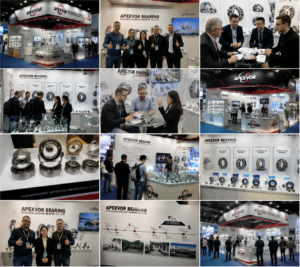
Professional buyers are welcome to arrange factory visits.
I share these details not because every buyer should choose APEXVOR, but because every serious manufacturer should be willing to explain its real capabilities with the same level of transparency.
Conclusion
A bearing manufacturer and a trading company may sell similar products, but they play different roles in the supply chain.
A trading company can be a valuable sourcing partner.
A genuine manufacturer can offer direct production knowledge, technical communication, and greater visibility into the processes it controls.
Neither business model automatically guarantees reliability.
After four generations of family involvement in bearing manufacturing, I have come to believe that buyers should look beyond company labels.
The most important question is not "Are you a factory?" It is "Can you prove who manufactures my bearings, how their quality is controlled, and who will take responsibility if something goes wrong?"
A supplier that can answer those questions clearly is worth considering for a long-term partnership.
People Also Ask
How Can I Tell If a Chinese Supplier Is a Factory or a Trading Company?
Ask for evidence of manufacturing equipment, production processes, technical staff, and inspection records. Arrange a live factory walkthrough or an independent inspection when appropriate. A business license alone may not establish which processes a supplier actually performs.
Are Trading Companies Cheaper Than Manufacturers?
Not necessarily. Manufacturers may offer competitive factory-direct pricing, while trading companies may reduce costs through order consolidation, sourcing efficiency, and logistics services. Compare total purchasing costs rather than unit prices alone.
Can a Trading Company Provide High-Quality Bearings?
Yes. A capable trading company can source high-quality bearings from qualified manufacturers and manage inspections effectively. Buyers should verify the original manufacturer, technical specifications, and quality-control arrangements.
Why Do Some Bearing Suppliers Have Thousands of Models?
Some manufacturers operate broad production systems, while others obtain products from partner factories. A large catalog does not prove that every product is manufactured in-house.
What Is the Biggest Advantage of Buying Bearings Directly from a Factory?
Direct access to manufacturing engineers and production information can improve technical communication, customization, quality investigations, and accountability.
What Documents Should I Request Before Buying Bearings in Bulk?
Request relevant technical drawings, material information, dimensional inspection reports, hardness or other test results where applicable, quality management certification details, and agreed acceptance criteria.
References
[^1]: Bearing Damage and Failure Modes — ISO 15243:2017. This standard classifies rolling bearing damage and failure modes and describes their characteristics and possible causes. It supports the article's explanation that bearing failures require technical investigation and cannot automatically be attributed to material quality alone. Source: ISO 15243:2017 — Official ISO Standard
[^2]: Quality Management Systems — ISO 9001:2015. ISO 9001 specifies requirements for a quality management system intended to support consistent provision of products and services that meet customer and applicable regulatory requirements. This supports the distinction between a supplier's management system and the need to verify actual product conformity. Source: ISO 9001:2015 — Official ISO Standard
[^3]: Verification of Accredited Management-System Certifications. IAF CertSearch provides a platform for checking available accredited management-system certification information. This supports the recommendation that buyers independently verify certification claims rather than relying exclusively on documents supplied by a seller. Source: IAF CertSearch
[^4]: Rolling Bearing Rating Life — ISO 281:2007. ISO 281 specifies methods for calculating rolling bearing dynamic load ratings and rating life. Its modified rating-life calculation considers factors such as reliability, lubrication conditions, and contamination. This supports the explanation that bearing performance must be assessed with consideration of both the bearing and its operating environment. Source: ISO 281:2007 — Official ISO Standard