How to Choose a High-Quality Wheel Bearing?
Buying a wheel bearing should be simple. You find the correct part number, compare a few quotations, and place your order.
But anyone who has worked in automotive parts distribution knows that the real challenge begins after the products reach customers.
A bearing that looks perfect on the inspection table may develop noise after several months. Another may fail because its sealing system cannot withstand water and road contamination. Sometimes, the bearing itself is not defective at all—the problem comes from incorrect installation or vehicle compatibility.
For an automotive distributor, these problems mean more than replacing a few products. They can lead to warranty claims, additional shipping costs, damaged customer relationships, and lost business.
So, how do you choose a high-quality wheel bearing?
The answer is to evaluate the complete product—not just its appearance, price, or brand.
A reliable wheel bearing requires suitable bearing steel, controlled heat treatment, accurate manufacturing, effective sealing, proper lubrication, and consistent quality inspection. It must also match the vehicle's technical requirements.
I'm Yuri, CEO of APEXVOR Bearing. Our family has been involved in bearing manufacturing since the 1970s.
Over the years, I've learned something important: the best purchasing decisions are rarely made by choosing the lowest quotation. They are made by understanding what you are buying and knowing which questions to ask.
In this guide, I'll share how experienced buyers evaluate wheel bearing quality, what manufacturing details matter most, and how to reduce risks before placing a wholesale order.
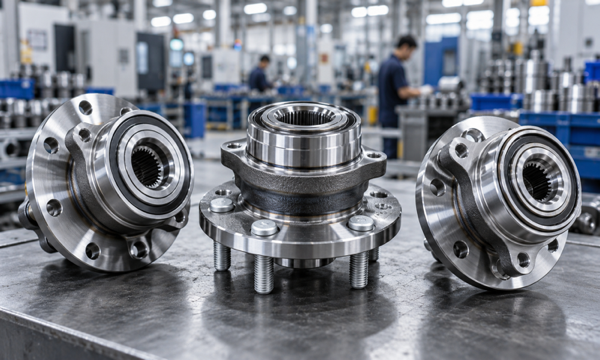
1. What Makes a Wheel Bearing High Quality?
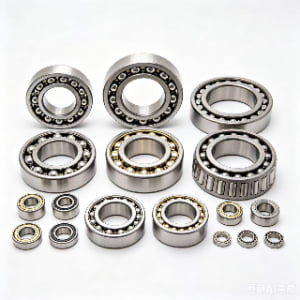
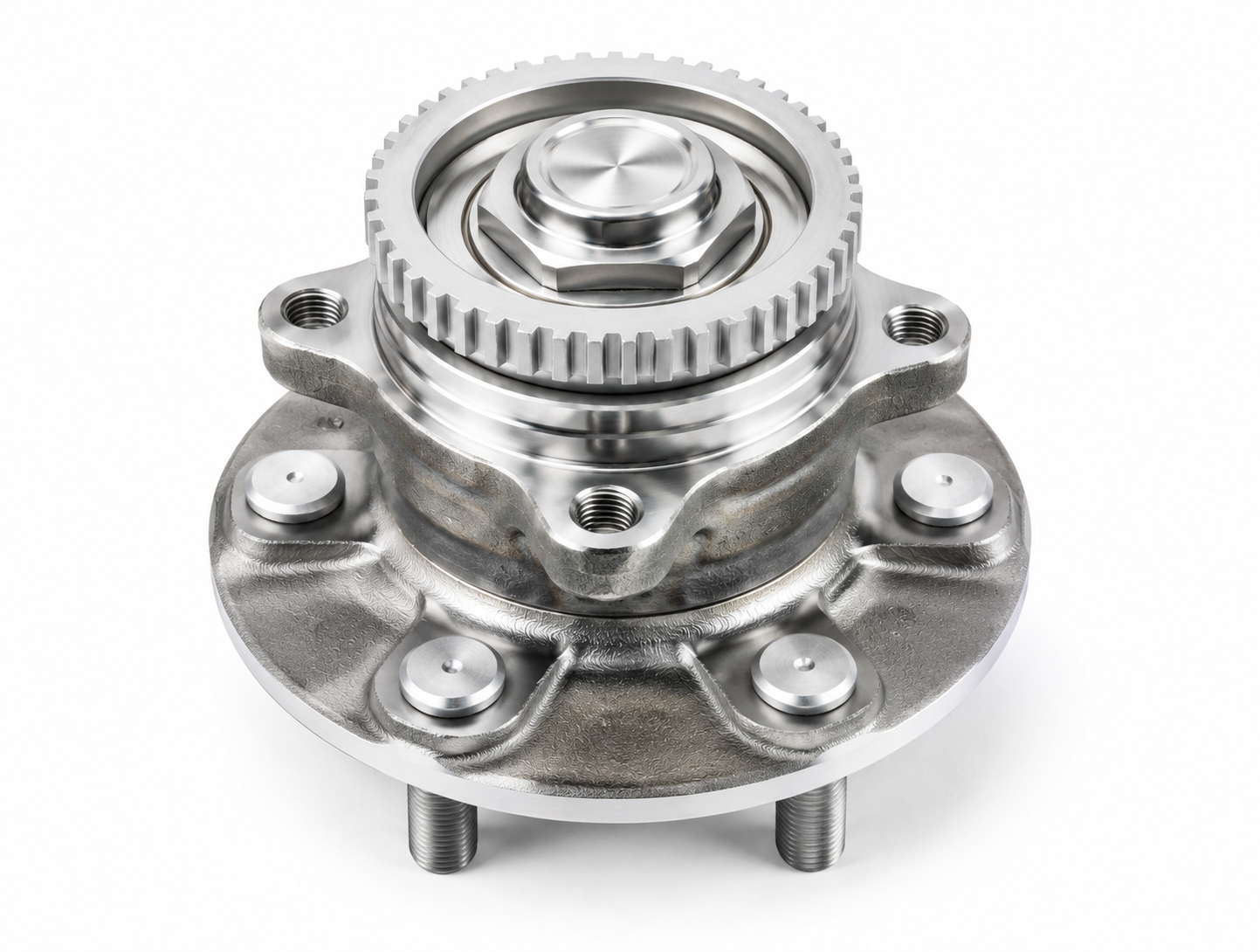
A wheel bearing supports the vehicle's weight while allowing the wheel to rotate smoothly.
During operation, it must withstand radial loads, axial loads, vibration, temperature changes, and road contamination.
That is why wheel bearing quality cannot be judged by one specification.
1.1 Bearing Steel: Quality Begins with the Material
The quality of bearing steel directly influences wear resistance and rolling contact fatigue performance.
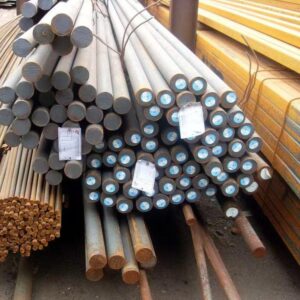
GCr15 high-carbon chromium bearing steel is commonly used in bearing manufacturing because it can provide high hardness and wear resistance after appropriate processing.
At APEXVOR, we primarily use GCr15 bearing steel from established steel suppliers.
However, the steel grade alone does not guarantee quality.
Two factories may purchase the same grade of steel but produce bearings with different performance.
Why?
Because material cleanliness, non-metallic inclusions, heat treatment, and manufacturing consistency all influence the finished bearing.
My advice to buyers: Don't simply ask whether a supplier uses GCr15 steel. Ask whether the supplier can provide material specifications, incoming inspection records, and batch traceability.
A reliable manufacturer should understand where its materials come from.
1.2 Heat Treatment: Hardness Is Not Everything
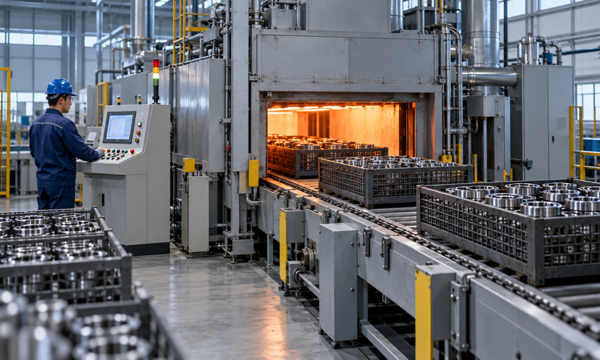
Heat treatment is one of the most important stages in bearing manufacturing.
Its purpose is to develop a suitable combination of hardness, toughness, wear resistance, and fatigue performance.
Poorly controlled heat treatment may produce inconsistent hardness, dimensional instability, or unwanted microstructural conditions.
But there is a common misunderstanding among buyers:
A harder bearing is not necessarily a better bearing.
Excessive hardness without adequate toughness may increase the risk of certain forms of damage.
At APEXVOR, heat treatment is controlled within our own manufacturing process.
Our typical hardened bearing steel specification is HRC 58–62, although the correct requirement depends on bearing design and application.
The international standard ISO 15243 [1] provides a classification of rolling bearing damage and failure modes.
It helps explain why bearing failures cannot always be attributed to material hardness alone.
1.3 Precision Grinding and Surface Finish
A wheel bearing may have excellent steel and properly controlled heat treatment, but poor machining can still compromise its performance.
Raceway geometry, dimensional accuracy, and surface finish influence how rolling elements distribute loads.
Poor manufacturing precision can contribute to:
- Excessive vibration
- Abnormal operating noise
- Uneven contact stress
- Increased friction
- Premature wear
Precision grinding and superfinishing help improve the geometry and surface condition of critical bearing components.
At our factory, these operations are performed internally rather than outsourced.
For wholesale buyers, the most useful question is not whether a factory owns expensive machines.
It is whether the factory can consistently manufacture bearings that meet agreed technical specifications.
2. How Do Seals and Lubrication Affect Wheel Bearing Life?
Many buyers focus heavily on steel quality and hardness.
However, contamination and lubrication problems can also shorten bearing service life.
A wheel bearing operates close to the road, where water, dust, dirt, and temperature fluctuations are unavoidable.
2.1 Why Sealing Performance Matters
The sealing system protects the internal rolling elements and raceways from external contamination.
A poorly designed or damaged seal may allow water and abrasive particles to enter the bearing.
Once contamination reaches the rolling contact surfaces, wear and fatigue damage can develop.
For automotive wheel hub units, sealing performance should be evaluated according to the intended operating environment.
A bearing designed for ordinary passenger-car use may face different requirements from one intended for commercial vehicles or demanding road conditions.
What should buyers ask?
Ask the manufacturer about seal design, contamination protection, and any relevant validation testing.
Do not assume that every sealed bearing offers the same protection.
2.2 Lubrication: The Hidden Factor
Lubrication reduces friction between moving surfaces and helps protect against wear.
But using more grease does not automatically improve bearing performance.
The grease must be suitable for the bearing design, operating temperature, speed, and expected service conditions.
Incorrect lubrication can contribute to overheating, increased friction, and premature damage.
The ISO 281 standard [2] describes rolling bearing rating-life calculations, including modified rating-life methods that account for factors such as lubrication and contamination.
For sealed wheel hub bearings, buyers should confirm that the manufacturer uses appropriate grease and controls the lubrication process.
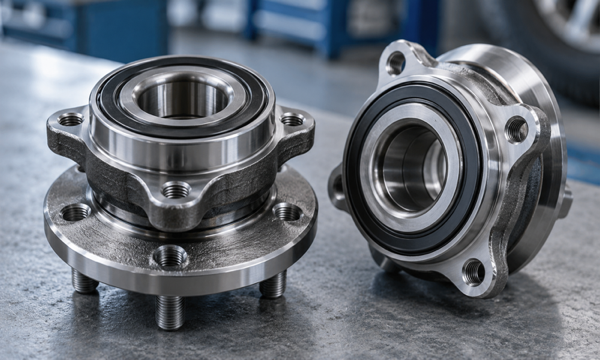
2.3 Why a Good Bearing Can Still Fail Early
Imagine purchasing a batch of well-manufactured wheel bearings.
The material is correct, the dimensions meet specification, and the supplier provides inspection reports.
Yet some customers still report premature failures.
Does that automatically mean the factory produced defective bearings?
Not necessarily.
Improper installation, excessive preload, incorrect tightening torque, contamination, and unsuitable operating conditions can also cause bearing damage.
This is why buyers should investigate failures using technical evidence rather than assumptions.
3. How Can Buyers Compare Wheel Bearing Quality Before Purchasing?
Let's consider a realistic purchasing situation.
You are an automotive parts distributor preparing to purchase 5,000 wheel bearings.
You receive quotations from three suppliers.
Supplier A offers the lowest price.
Supplier B promises premium quality but provides limited technical information.
Supplier C offers a competitive quotation together with material specifications, inspection records, and sample testing options.
Which supplier should you choose?
I would begin by evaluating the evidence provided by Supplier C.
Not because Supplier C is automatically the best manufacturer, but because measurable information makes comparison possible.
3.1 Seven Factors Every Buyer Should Compare
1. Material Quality
Confirm the bearing steel grade and ask for supporting material records.
2. Heat Treatment
Request hardness specifications and information about process control.
3. Manufacturing Precision
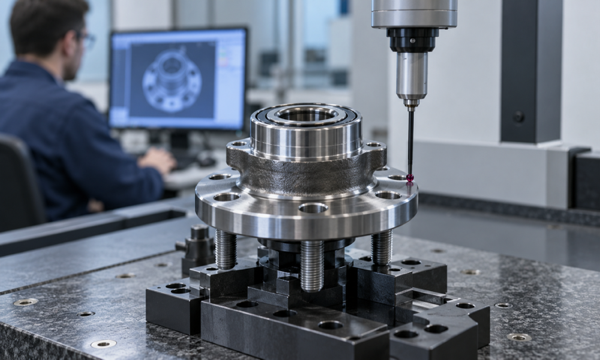
Check dimensional tolerances, raceway accuracy, and relevant inspection results.
4. Sealing Performance
Evaluate the suitability of the seal design for the intended vehicle and operating environment.
5. Lubrication
Confirm the grease specification and lubrication requirements.
6. Quality Inspection
Ask whether the supplier performs dimensional checks, functional testing, and batch traceability.
7. Vehicle Compatibility
Verify OEM references, dimensions, mounting configuration, and any relevant ABS requirements.
A bearing can be manufactured perfectly and still be the wrong product for your customer.
3.2 Why the Cheapest Bearing May Cost More
Suppose Supplier A quotes $8 per bearing.
Supplier B quotes $10.
For an order of 5,000 bearings, the difference is $10,000.
At first glance, choosing the cheaper product seems reasonable.
But consider what happens if the lower-priced bearings generate more warranty claims.
Your actual expenses may include replacement products, international shipping, inspection costs, customer compensation, and lost repeat orders.
The important point is not that expensive bearings are always better.
They are not.
The important point is to compare total purchasing costs under equivalent technical and quality requirements.
A lower price is valuable only when the product meets your customer's needs.
4. How Can You Avoid Buying Low-Quality Wheel Bearings?
In my experience, many purchasing disputes begin with unclear expectations.
The buyer believes a certain level of quality was included.
The supplier believes it delivered exactly what was ordered.
The disagreement often comes from specifications that were never clearly confirmed.
4.1 Verify the Correct Bearing Model
Before discussing price, confirm the exact bearing required.
For automotive wheel bearings, this may include:
- OEM reference number
- Bearing dimensions
- Wheel hub configuration
- ABS encoder or sensor compatibility
- Vehicle application
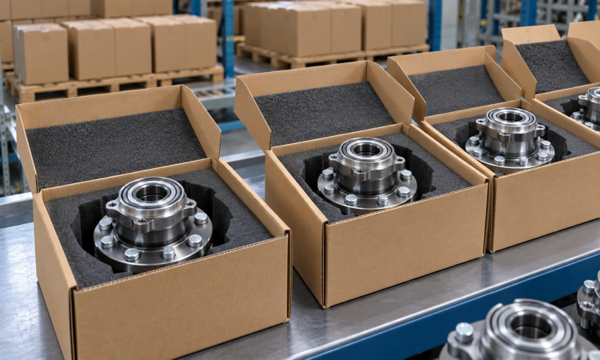
- Packaging requirements
Do not rely on appearance alone.
Different wheel hub units may look similar but have different technical requirements.
4.2 Request Samples Before Bulk Orders
Samples allow buyers to evaluate the supplier's actual products.
For important purchasing programs, I recommend checking samples against agreed specifications before confirming large orders.
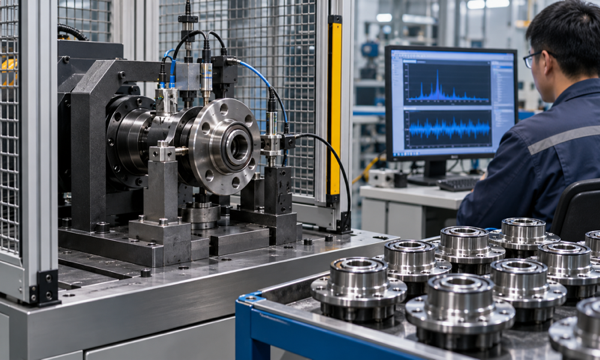
Depending on the application, this may include dimensional measurements, rotational checks, sealing evaluation, or laboratory testing.
However, one good sample does not guarantee that every future production batch will be identical.
That is why production consistency and quality control matter.
4.3 Verify Certifications and Inspection Reports
A certificate can provide useful information, but it should never replace product verification.
For example, ISO 9001 certification relates to a company's quality management system.
It does not independently prove that every wheel bearing meets your technical requirements.
The IAF CertSearch database [3] can help buyers verify information about accredited management-system certifications.
Buyers should also request relevant inspection records and confirm that documents correspond to the products being purchased.
4.4 Don't Ignore Installation Requirements
Incorrect installation can damage an otherwise reliable wheel bearing.
For example, improper tightening torque or incorrect installation procedures may affect bearing performance.
Timken's wheel hub installation guidance [4] emphasizes following appropriate installation procedures and vehicle manufacturer specifications.
For distributors, providing accurate installation guidance can help reduce avoidable warranty disputes.
5. How Do You Choose a Reliable Wheel Bearing Manufacturer?
Choosing the right product is important.
Choosing the right manufacturing partner is equally important.
A dependable supplier should be able to explain how its bearings are manufactured, how quality is controlled, and how problems are handled.
5.1 Manufacturer or Trading Company?
Both manufacturers and trading companies can play legitimate roles in international trade.
However, buyers should understand who actually manufactures the products.
If you require customized specifications, stable production quality, or long-term supply arrangements, direct communication with the manufacturer may offer advantages.
Ask suppliers:
- Which manufacturing processes are completed in-house?
- Are heat treatment and precision grinding outsourced?
- Can production batches be traced?
- Can the factory provide inspection reports?
- Can buyers arrange factory visits or third-party inspections?
Clear answers are more valuable than impressive marketing language.
5.2 What Manufacturing Capabilities Should You Look For?
At APEXVOR, our family manufacturing business dates back to the 1970s.
Our factory is located in China's bearing manufacturing region.
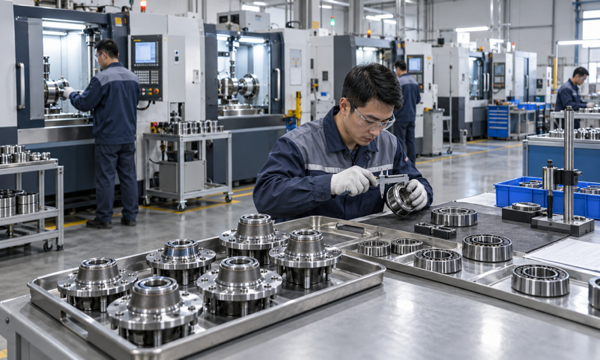
We operate eight production lines and control eight key manufacturing stages:
- Raw material cutting
- Forging
- Spheroidizing annealing
- Turning
- Heat treatment and quenching
- Grinding and superfinishing
- Cleaning and assembly
- Final inspection and testing
Controlling these operations internally helps us manage manufacturing consistency and traceability.
But I want to emphasize something:
You should not choose APEXVOR—or any manufacturer—simply because it claims to have advanced equipment.
Ask for evidence.
Review inspection reports.
Compare samples.
Verify manufacturing capabilities.
A good supplier should welcome technical questions.
5.3 What About MOQ, Delivery, and Customization?
For B2B buyers, product quality is only one part of the purchasing decision.
You also need dependable delivery and practical order arrangements.
At APEXVOR, our family-owned factory offers wholesale manufacturing services for international buyers.
Our minimum order quantity starts from 500 pieces for eligible products.
Our typical production lead times are:
- Standard bearings: approximately 15–25 days
- Customized bearings: approximately 25–40 days
Actual lead times depend on specifications, order quantities, and production schedules.
We also support OEM customization and private-label requirements.
However, every purchasing arrangement should be confirmed before an order is placed.
A reliable supplier should communicate realistic production schedules rather than promise delivery dates it cannot meet.
6. Final Checklist: What Should You Confirm Before Ordering?
Before placing your next wholesale wheel bearing order, take a few minutes to review the following checklist.
6.1 Product Specifications
Confirm the bearing model, OEM reference, dimensions, vehicle compatibility, and relevant technical requirements.
6.2 Manufacturing Quality
Verify bearing steel specifications, heat treatment requirements, machining accuracy, sealing, and lubrication.
6.3 Inspection and Traceability
Request inspection reports, sample evaluation results, and batch identification information where applicable.
6.4 Commercial Terms
Confirm pricing, minimum order quantity, production lead time, packaging, payment terms, and warranty responsibilities.
6.5 Supplier Reliability
Evaluate the manufacturer's communication, technical knowledge, production capabilities, and willingness to resolve problems.
My final advice: Never let a low quotation replace a proper technical evaluation.
A reliable wheel bearing should meet your customer's requirements consistently—not just look good when it leaves the factory.
Conclusion
Choosing a high-quality wheel bearing is not about finding the most expensive brand or the cheapest factory.
It is about understanding the factors that influence bearing performance and verifying that the supplier can deliver consistent quality.
Steel quality matters.
Heat treatment matters.
Precision manufacturing matters.
Sealing, lubrication, and correct installation matter just as much.
For automotive distributors and wholesale buyers, the best supplier is one that provides suitable products, measurable quality, clear communication, and dependable long-term support.
At APEXVOR, we believe trust should be built through manufacturing transparency and consistent performance—not marketing promises.
If you're evaluating a wheel bearing supplier, start with the technical specifications, request samples, and ask the questions that matter.
A good purchasing decision begins long before the first shipment arrives.
Frequently Asked Questions
How Can You Tell if a Wheel Bearing Is High Quality?
Check the bearing's material specifications, manufacturing precision, sealing design, lubrication, and inspection documentation.
For wholesale purchasing, request samples and evaluate them against agreed technical requirements.
Appearance alone cannot confirm internal manufacturing quality.
Are Expensive Wheel Bearings Always Better?
No.
Higher prices may reflect brand positioning, distribution costs, or additional product features.
Compare bearings based on equivalent specifications, verified quality, and total purchasing costs.
How Long Should a High-Quality Wheel Bearing Last?
There is no universal service-life guarantee.
Actual bearing life depends on loads, installation, lubrication, contamination, operating conditions, and product design.
ISO 281 provides standardized methods for calculating bearing rating life, but actual operating life may differ [2].
Are Chinese Wheel Bearings Reliable?
Yes. Capable Chinese manufacturers can produce reliable wheel bearings.
However, manufacturing capabilities and quality control vary between suppliers.
Buyers should evaluate the actual factory, technical documentation, and product samples rather than judging quality solely by country of origin.
What Is the Most Important Factor When Buying Wheel Bearings in Bulk?
There is no single factor that guarantees quality.
For bulk purchasing, consistent manufacturing quality, correct product specifications, reliable inspection, and dependable supplier communication are particularly important.
References
[1] ISO 15243 — Rolling Bearings: Damage and Failures
This international standard classifies rolling bearing damage and failure modes and supports systematic failure analysis.
[2] ISO 281 — Rolling Bearings: Dynamic Load Ratings and Rating Life
This standard describes methods for calculating rolling bearing rating life, including modified calculations that consider lubrication and contamination.
[3] IAF CertSearch — Accredited Certification Verification
This database helps buyers verify information about accredited management-system certifications.
IAF CertSearch Official Website
[4] Timken — Removing and Installing Hub Unit Bearings
Timken provides technical guidance on correct wheel hub bearing installation and the importance of following vehicle manufacturer specifications.